
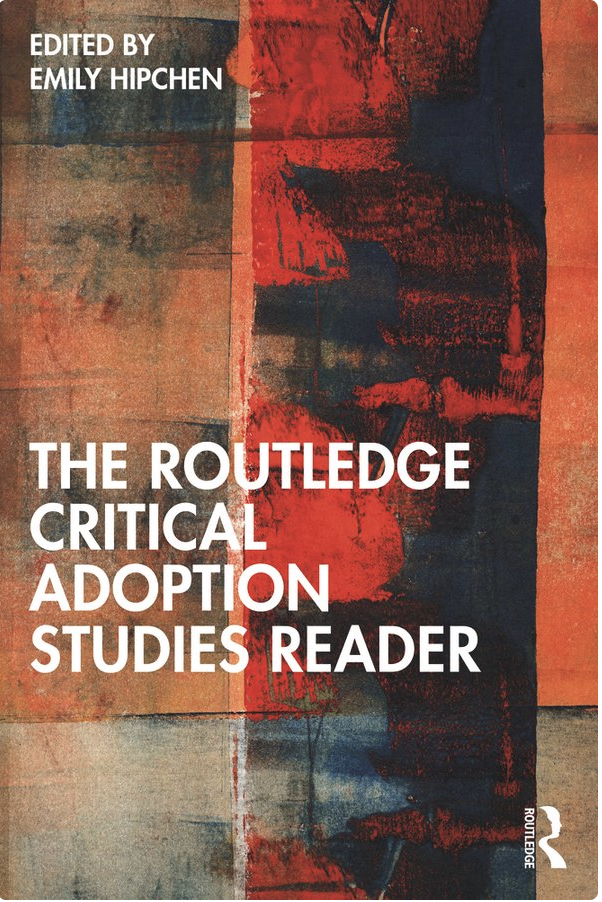
What’s it about?
In short: This volume is a collection of excerpts from various and useful essays that take a scholarly approach to cultural representations of adoption, challenging long-held ideas about the benefits and damages attributed to adoption.
This volume presents a central source of scholarly approaches arranged around fundamental questions about how adoption, as a complex practice of family-making, is represented in art, philosophy, the law, history, literature, political science, and other humanities. Divided into three major sections, this volume traces the history of adoption and its analogues, identifies major movements in the practice, and illuminates comprehensive disciplinary frameworks that underpin the field’s approaches. This key scholarly and pedagogical tool includes excerpts from scholars such as Judith Butler, Dorothy Roberts, Margaret Homans, Margaret D. Jacobs, Arissa Oh, Marianne Novy, and Kori Graves, exploring a variety of representations of adoption and embracing interdisciplinary discussions of reproduction as it intersects race, ethnicity, power-relations, the concept of nation, history, the idea of childhood, and many other contemporary concerns. The Routledge Critical Adoption Studies Reader provides a single-volume resource for instructors or students who want a convenient collection of foundational materials for teaching or reference and for researchers newly discovering the field. This volume’s humanities perspective makes it the first of its kind to collect secondary materials in Critical Adoption Studies for researchers, who, in taking up cultural representations of adoption, examine cultural contexts not for their impact on the practice over time but for their richness of engagement with the human experience of belonging, kinship, and identity.